Primary CNS Lymphoma: Radiation Therapy Overview
English Version
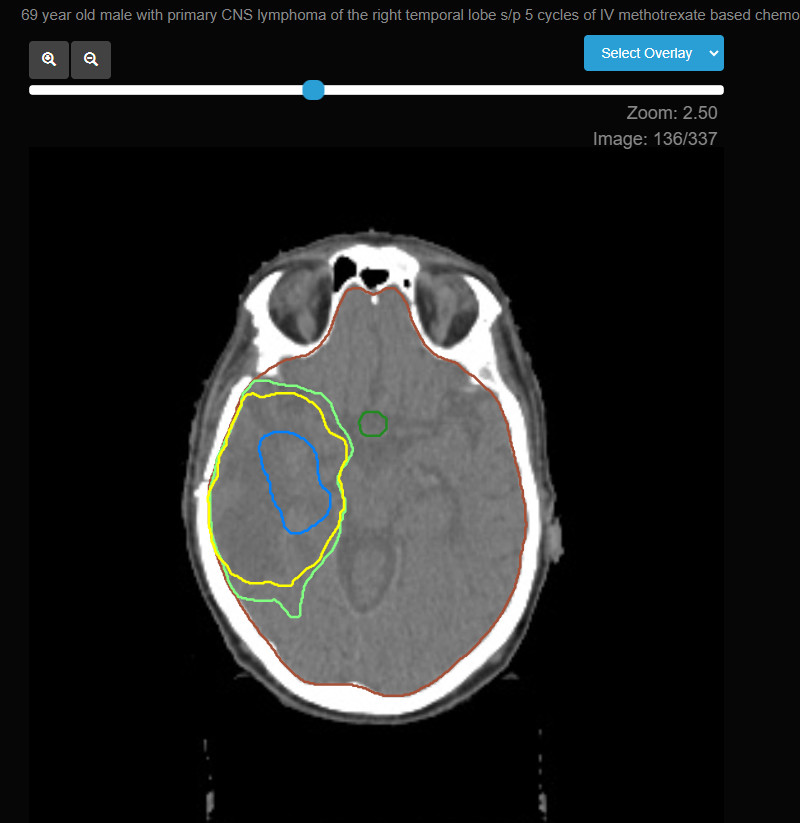
Primary CNS Lymphoma (PCNSL) is a rare and aggressive type of non-Hodgkin lymphoma that occurs within the brain, spinal cord, or eye without evidence of systemic disease. Radiation therapy, particularly whole-brain radiation therapy (WBRT), plays a critical role in the management of PCNSL, often in combination with chemotherapy.
1. Indications for Radiation Therapy
- Consolidative Therapy After Chemotherapy: Radiation therapy is most commonly used as a consolidative treatment after high-dose methotrexate-based chemotherapy. WBRT is used to eliminate any residual disease and to decrease the risk of recurrence.
- Primary Treatment: In certain cases, particularly in patients who cannot tolerate chemotherapy due to age or comorbidities, radiation therapy alone may be used as the primary treatment. However, this approach is less common due to the risk of neurotoxicity.
- Salvage Therapy: Radiation therapy is also used as a salvage treatment for recurrent PCNSL after chemotherapy. It may also be used in cases where there is an incomplete response to chemotherapy.
- Palliative Care: In advanced cases or in patients with significant comorbidities where curative treatment is not possible, radiation therapy may be used palliatively to alleviate symptoms such as headache, seizures, or neurological deficits.
2. Treatment Field
- Whole-Brain Radiation Therapy (WBRT): The standard treatment field for PCNSL is the entire brain. WBRT is necessary because PCNSL often presents with multiple lesions or diffuse involvement of the brain. The goal is to treat both visible and microscopic disease.
- Spinal Cord Involvement: If there is evidence of spinal cord involvement, the radiation field may be extended to include the spinal axis.
- Intraocular Involvement: For patients with intraocular lymphoma, the radiation field may be extended to include the eyes, particularly the affected eye.
3. Radiation Dose
- Consolidative WBRT: The typical dose for consolidative WBRT after chemotherapy is 23.4-36 Gy delivered in 1.8-2 Gy fractions. This dose aims to minimize neurotoxicity while effectively treating residual disease.
- Primary WBRT: For patients treated with WBRT alone, higher doses of 40-50 Gy in 1.8-2 Gy fractions may be used to achieve tumor control. However, this is associated with a higher risk of cognitive decline.
- Salvage Radiation Therapy: Doses for salvage therapy are similar to those used in primary WBRT, with adjustments made based on prior radiation exposure and patient tolerance.
- Palliative Radiation Therapy: Lower doses, such as 20-30 Gy in 5-10 fractions, may be used in palliative settings to relieve symptoms and improve quality of life.
4. Treatment Techniques
- Whole-Brain Radiation Therapy (WBRT): WBRT is typically delivered using conventional linear accelerators, with the patient's head immobilized to ensure precise treatment delivery. Advanced imaging techniques, such as MRI, are used for treatment planning.
- Intensity-Modulated Radiation Therapy (IMRT): IMRT may be used in some cases to spare critical structures and reduce the risk of neurotoxicity, particularly in younger patients or those with a high risk of cognitive decline.
- Proton Therapy: Proton therapy is occasionally considered for younger patients to minimize the radiation dose to surrounding healthy tissues and reduce long-term side effects, although this is less commonly used.
5. Side Effects
- Acute Effects: Common acute side effects include fatigue, hair loss, headaches, and nausea. Patients may also experience acute neurological symptoms such as confusion or worsening of pre-existing neurological deficits.
- Late Effects: The most concerning late effect of WBRT in PCNSL is neurocognitive decline, which can significantly impact quality of life. Radiation necrosis, hearing loss, and, in rare cases, secondary malignancies are also possible. The risk of these effects increases with higher radiation doses and in older patients.
6. Follow-up
- Neurological Assessment: Regular neurological evaluations are critical to monitor for changes in cognitive function, coordination, and other neurological symptoms.
- Imaging: Routine follow-up with MRI is essential to monitor for recurrence and assess treatment response. Imaging is typically performed every 3-6 months for the first few years after treatment.
- Management of Late Effects: Long-term follow-up is necessary to manage late effects such as cognitive decline. Supportive care, cognitive rehabilitation, and medications may be needed to help manage these symptoms and maintain quality of life.
Korean Version
원발성 중추신경계 림프종(PCNSL)은 드문 형태의 공격적인 비호지킨 림프종으로, 뇌, 척수 또는 눈에서 발생하며 전신 질환의 증거 없이 나타납니다. 방사선 치료, 특히 전뇌 방사선 치료(WBRT)는 PCNSL 관리에서 중요한 역할을 하며, 종종 화학요법과 결합하여 사용됩니다.
1. 방사선치료 적응증
- 화학요법 후 통합 치료: 방사선 치료는 고용량 메토트렉세이트 기반 화학요법 후 통합 치료로 가장 흔히 사용됩니다. WBRT는 잔여 질병을 제거하고 재발 위험을 줄이는 데 사용됩니다.
- 일차 치료: 특히 나이 또는 동반 질환으로 인해 화학요법을 견딜 수 없는 환자의 경우, 방사선 치료 단독으로 일차 치료로 사용될 수 있습니다. 그러나 신경독성 위험 때문에 이 접근법은 덜 일반적입니다.
- 구제 치료: 방사선 치료는 또한 화학요법 후 재발한 PCNSL의 구제 치료로 사용됩니다. 또한 화학요법에 불완전한 반응이 있는 경우에도 사용될 수 있습니다.
- 완화 치료: 진행성 PCNSL 또는 동반 질환이 있는 환자에서 치유적 치료가 불가능한 경우, 두통, 발작 또는 신경학적 결손과 같은 증상을 완화하기 위해 방사선 치료가 사용될 수 있습니다.
2. 치료 범위
- 전뇌 방사선 치료(WBRT): PCNSL의 표준 치료 범위는 뇌 전체입니다. WBRT는 PCNSL이 여러 병변 또는 뇌의 확산성 침범을 보이는 경우가 많기 때문에 필요합니다. 목표는 눈에 보이는 병변과 미세 질병을 모두 치료하는 것입니다.
- 척수 침범: 척수 침범이 있는 경우, 방사선 치료 범위는 척수 축까지 확장될 수 있습니다.
- 안구 침범: 안구 림프종이 있는 환자의 경우, 특히 영향을 받은 눈을 포함하여 방사선 치료 범위가 눈까지 확장될 수 있습니다.
3. 방사선 선량
- 통합 WBRT: 화학요법 후 통합 WBRT의 일반적인 선량은 1.8-2 Gy로 분할된 23.4-36 Gy입니다. 이 선량은 신경독성을 최소화하면서 잔여 질병을 효과적으로 치료하는 것을 목표로 합니다.
- 일차 WBRT: WBRT 단독으로 치료받는 환자의 경우, 40-50 Gy의 더 높은 선량이 1.8-2 Gy로 분할되어 종양 제어를 위해 사용될 수 있습니다. 그러나 이는 인지 기능 저하의 위험이 높습니다.
- 구제 방사선 치료: 구제 치료를 위한 선량은 일차 WBRT에서 사용된 것과 유사하며, 이전 방사선 노출 및 환자 내성을 기반으로 조정됩니다.
- 완화 방사선 치료: 완화 환경에서는 5-10회 분할로 20-30 Gy와 같은 낮은 선량이 증상을 완화하고 삶의 질을 개선하기 위해 사용될 수 있습니다.
4. 치료 기법
- 전뇌 방사선 치료(WBRT): WBRT는 환자의 머리를 고정하여 정확한 치료 전달을 보장하는 기존 선형 가속기를 사용하여 수행됩니다. 치료 계획을 위해 MRI와 같은 고급 영상 기술이 사용됩니다.
- 강도 변조 방사선 치료(IMRT): IMRT는 특히 젊은 환자나 인지 기능 저하 위험이 높은 환자에서 신경독성 위험을 줄이기 위해 중요한 구조물을 보호하는 데 사용할 수 있습니다.
- 양성자 치료: 양성자 치료는 장기적인 부작용을 줄이기 위해 주변 건강한 조직에 대한 방사선 선량을 최소화하기 위해 때때로 젊은 환자에게 고려되지만, 이 방법은 덜 일반적으로 사용됩니다.
5. 부작용
- 급성 부작용: 일반적인 급성 부작용으로는 피로, 탈모, 두통 및 메스꺼움이 포함됩니다. 환자는 혼란이나 기존 신경학적 결손의 악화와 같은 급성 신경학적 증상도 경험할 수 있습니다.
- 지연된 부작용: PCNSL에서 WBRT의 가장 우려되는 지연된 부작용은 인지 기능 저하로, 이는 삶의 질에 상당한 영향을 미칠 수 있습니다. 방사선 괴사, 청력 상실 및 드물게 이차 악성 종양이 발생할 수 있습니다. 이러한 부작용의 위험은 높은 방사선 선량 및 고령 환자에서 증가합니다.
6. 추적 관리
- 신경학적 평가: 인지 기능, 협응 및 기타 신경학적 증상의 변화를 모니터링하기 위해 정기적인 신경학적 평가가 중요합니다.
- 영상 검사: 재발 모니터링 및 치료 반응 평가를 위해 MRI를 통한 정기적인 추적 검사가 필수적입니다. 치료 후 첫 몇 년 동안은 매 3-6개월마다 영상 검사가 수행됩니다.
- 지연된 부작용 관리: 인지 기능 저하와 같은 지연된 부작용을 관리하기 위해 장기적인 추적 관리가 필요합니다. 지지 요법, 인지 재활 및 약물 치료가 이러한 증상을 관리하고 삶의 질을 유지하는 데 필요할 수 있습니다.


Primary CNS Lymphoma: Radiation Therapy Overview
English Version
Primary CNS Lymphoma (PCNSL) is a rare and aggressive type of non-Hodgkin lymphoma that occurs within the brain, spinal cord, or eye without evidence of systemic disease. Radiation therapy, particularly whole-brain radiation therapy (WBRT), plays a critical role in the management of PCNSL, often in combination with chemotherapy.
1. Indications for Radiation Therapy
2. Treatment Field
3. Radiation Dose
4. Treatment Techniques
5. Side Effects
6. Follow-up
Korean Version
원발성 중추신경계 림프종(PCNSL)은 드문 형태의 공격적인 비호지킨 림프종으로, 뇌, 척수 또는 눈에서 발생하며 전신 질환의 증거 없이 나타납니다. 방사선 치료, 특히 전뇌 방사선 치료(WBRT)는 PCNSL 관리에서 중요한 역할을 하며, 종종 화학요법과 결합하여 사용됩니다.
1. 방사선치료 적응증
2. 치료 범위
3. 방사선 선량
4. 치료 기법
5. 부작용
6. 추적 관리